
Hotspot
Where the party starts. And stays.
Role: UX Researcher & UI Designer
Duration: 13 weeks
Problem
Nights out should be fun, not frustrating.
But planning them often turns into chaos: endless group chats, last-minute changes, and disappointing venues.
The challenge
How can we help young people have a seamless night out without losing each other, ending up at places they don’t enjoy, or canceling last minute?
The goal of this design was to tackle these issues head-on and create a solution that simplifies and improves the group planning experience.
The solution
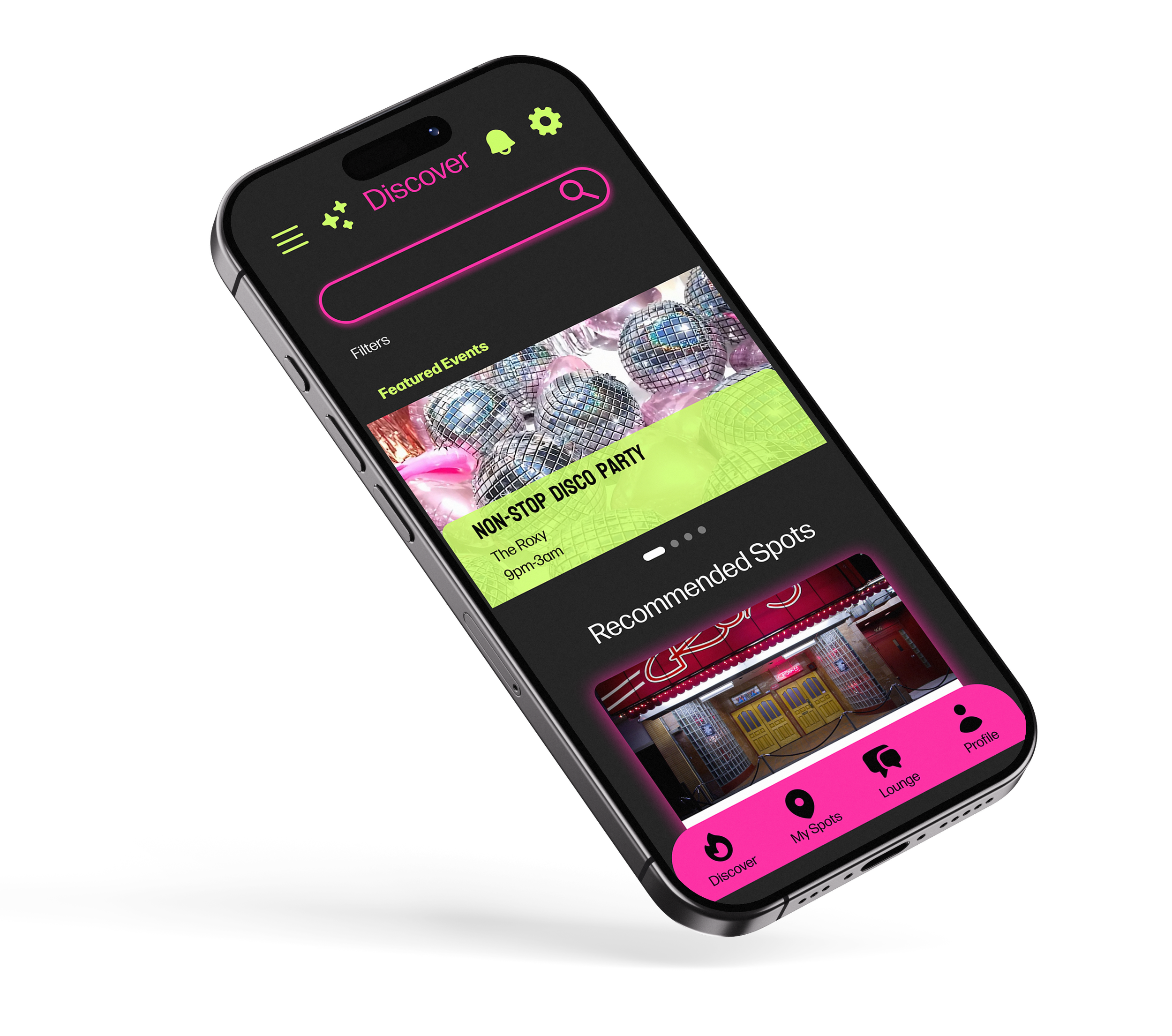
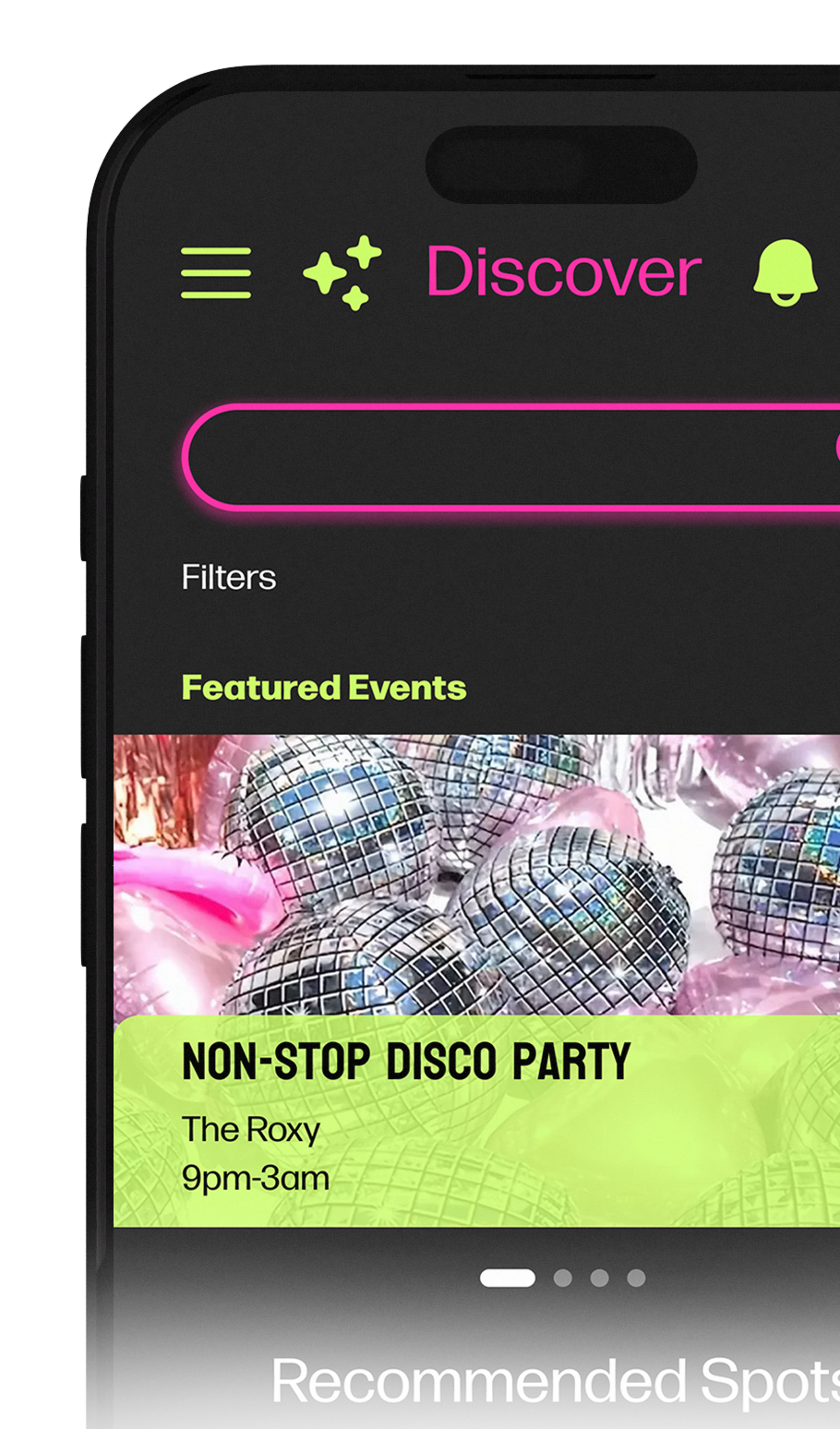
Hotspot, an app built specifically to streamline planning, keep friends connected, and help capture the best memories from the night.
Our goal wasn’t just to build another nightlife planning tool. We set out to design a full social experience, starting from the moment the idea of going out is born, all the way to long after the night ends, with memories saved and revisited in the app.
Key features
Discover events
Youngsters can discover unique nightlife options tailored to their preferences. Events are tagged with helpful details like vibe, dress code, and price.
They can easily share their favorite Spots with friends and create a dedicated chat for planning a night out.
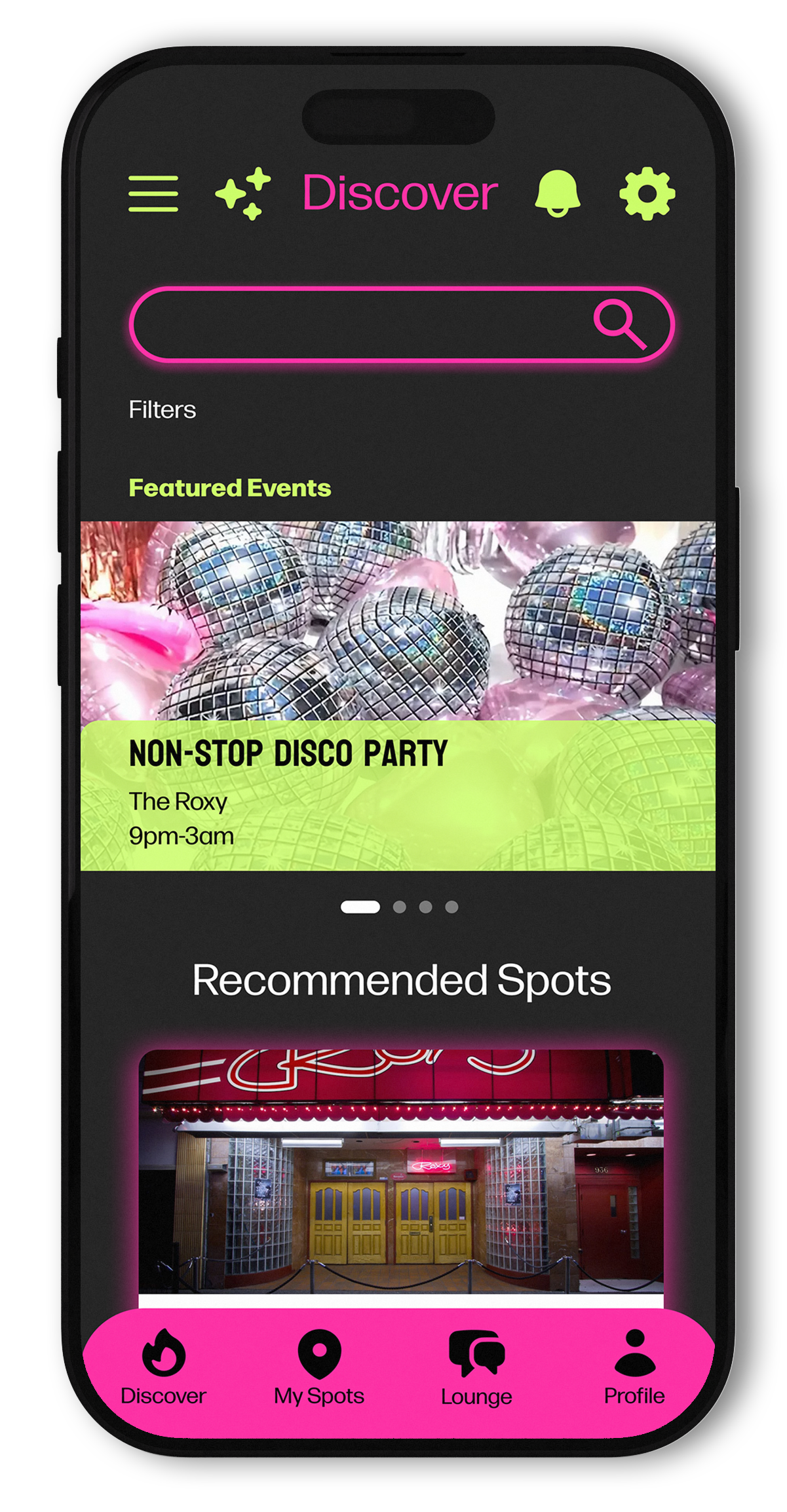
53% of young adults feel they don’t have a say in choosing a venue for a night out. To solve this, we introduced a democratic group decision feature within the Lounge, where chats are visible. By creating a poll, friends can comfortably vote on where to go, ensuring everyone has a voice in the plan.
Democratic group decisions
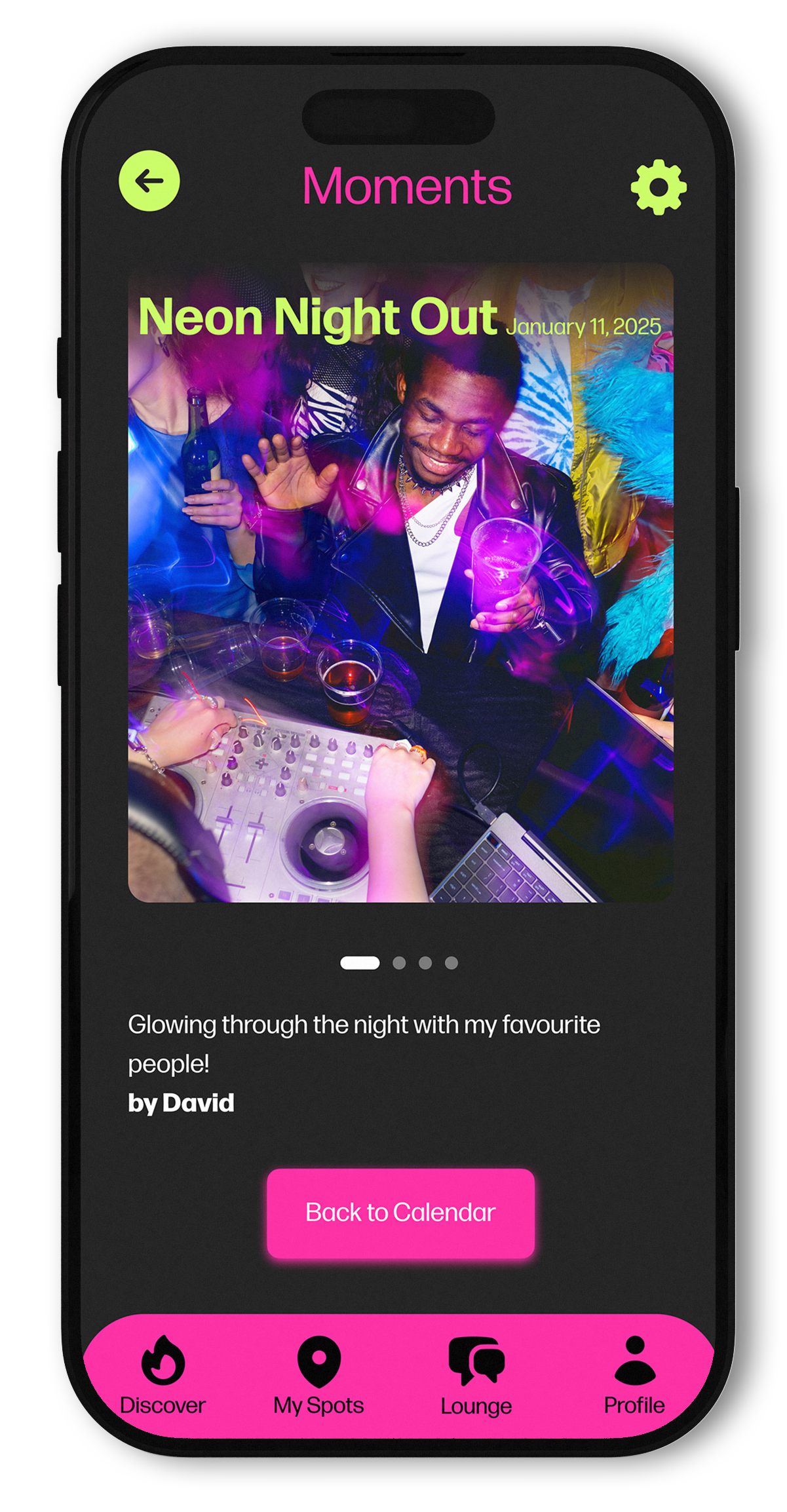
Moments
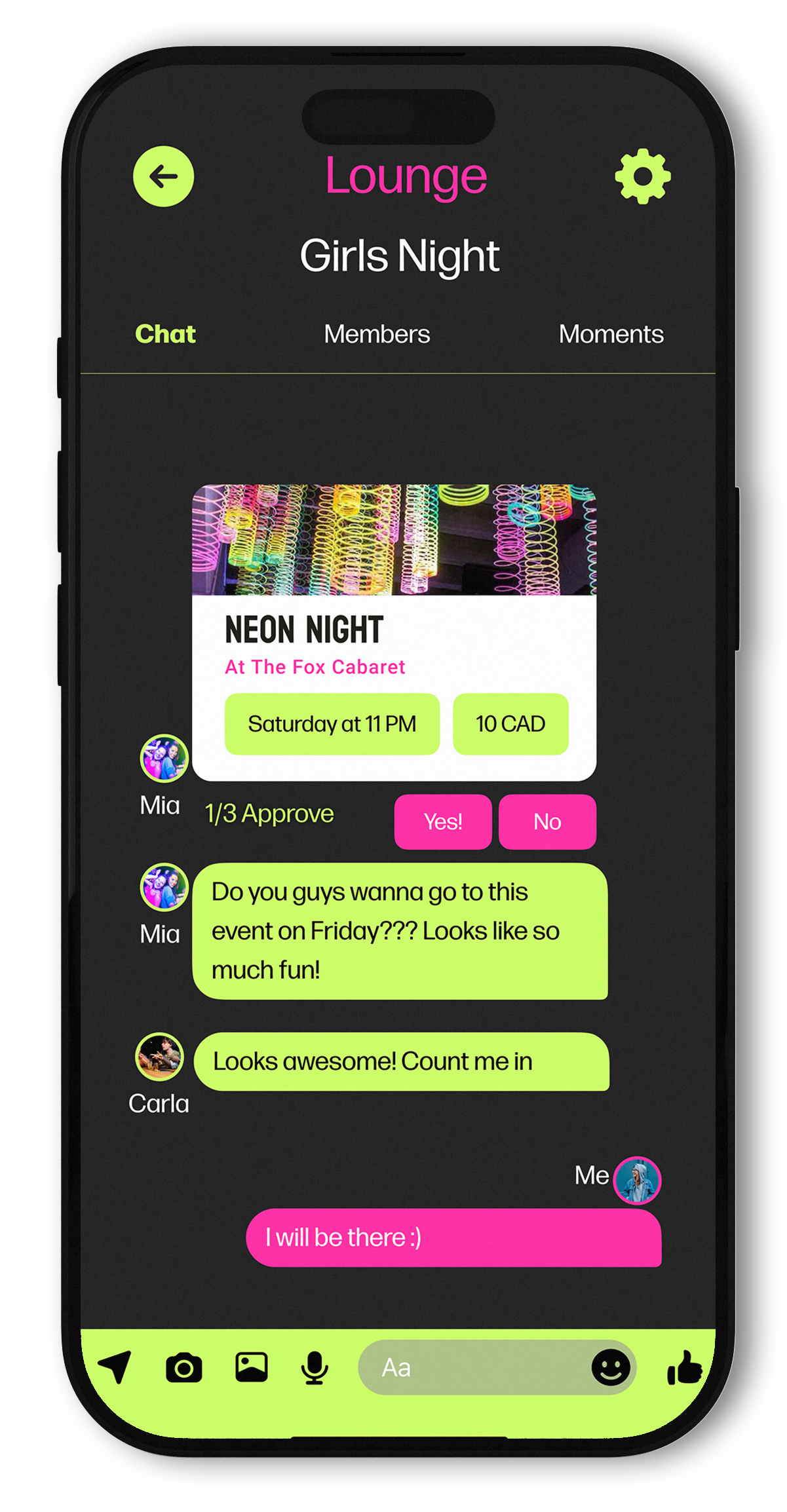
Photos shared before, during, and after the night out are stored directly within the group chat. These moments are saved as memories, allowing friends to revisit their favorite nights anytime through their shared memory capsule.
Stay connected
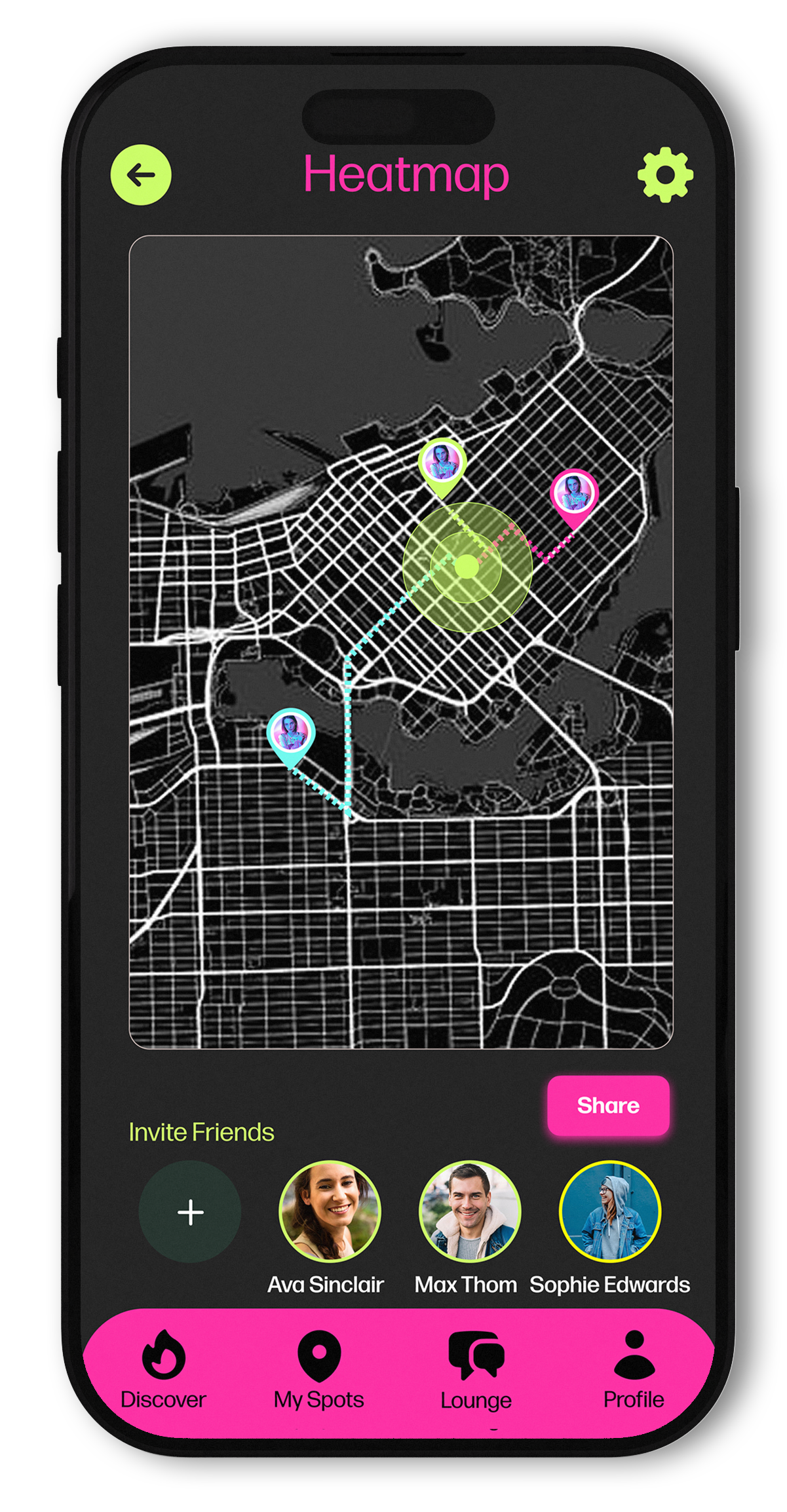
Friends can choose to share their live location during the night, making it easier to stay connected and avoid losing each other in crowded venues or busy streets. Just click on the Heatmap and check where your friends are at.
How did we get here?
To ensure we created an app that truly addresses the challenges young adults face when planning a night out, we conducted mixed-method research combining surveys and interviews.
Mixed-method surveys
1.
We gathered responses from 49 participants through social platforms, aged 19–35, who regularly attend nightlife events. The survey included both quantitative questions (to identify trends) and open ended questions (to capture personal experiences and emotions). Based on the responses we discovered three key pain points.
78%
are comfortable sharing their location with friends
100%
have arrived at a venue that didn’t meet expectations
53%
don’t feel they have a say in venue choice
“I just want to have a say without arguing in the group chat.”
“I’m tired of ending up somewhere I don’t like.”
“WHERE IS EVERYONE?”
Interviews
2.
To dive deeper into the pain points we uncovered, we conducted five one-on-one interviews. These conversations confirmed our survey insights and expanded our findings. In addition to the three main pain points, the interviews revealed other challenges young adults face, such as last-minute plan changes and difficulty finding clear event details.
Affinity diagram
To make sense of the data, we created an affinity diagram to cluster themes around.
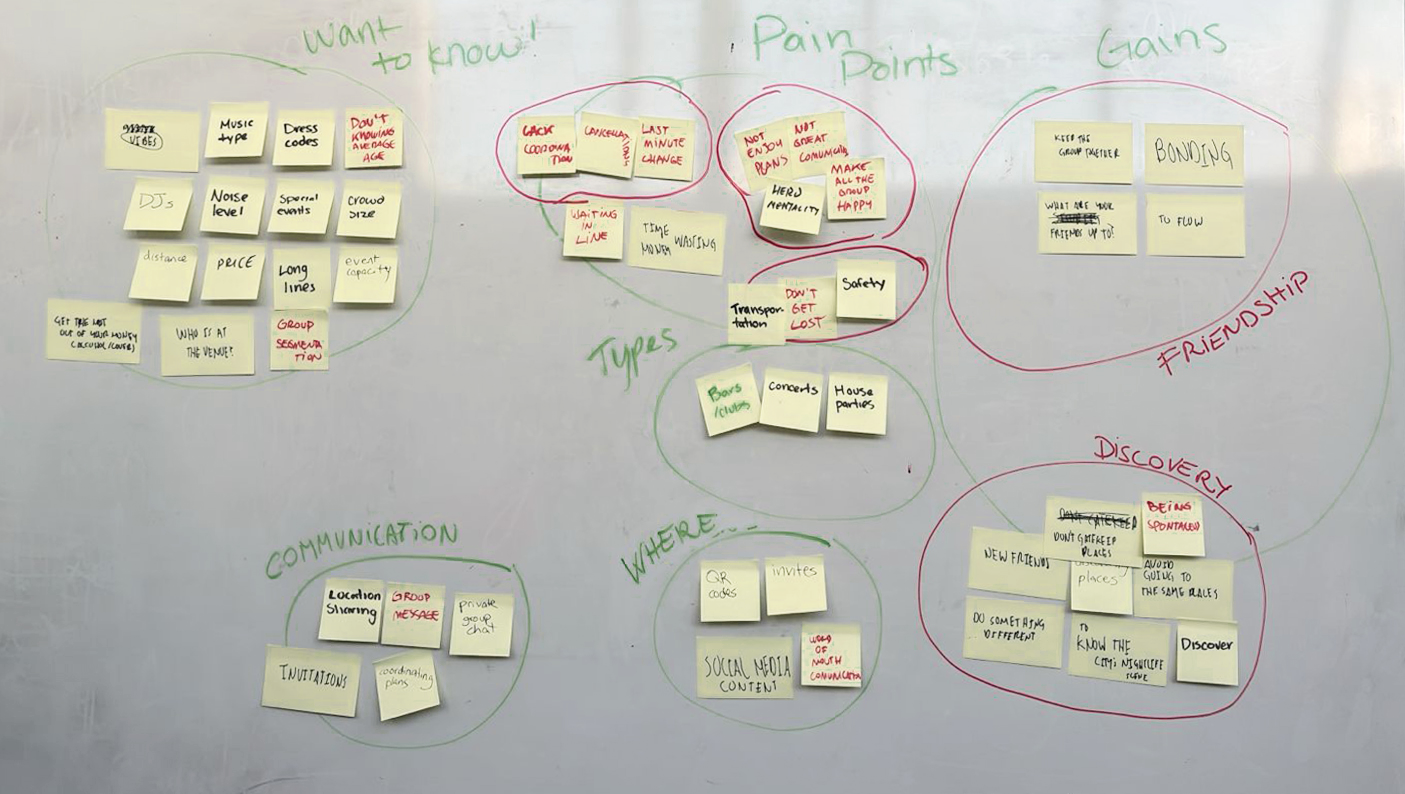
As we organized the insights for the affinity diagram, a pattern emerged. The issue wasn’t just poor planning or bad communication—it was the feeling of being left out or disconnected during nights out.
The real problem wasn’t coordination, but the emotional struggle behind group decisions: the awkward silences, the pressure to avoid conflict, and the frustration of trying to keep everyone together.
So how might we…
help young adults coordinate nightlife plans in a way that feels collaborative, exciting, and safe?
Competitor analysis
To better understand the space, we explored existing nightlife and event planning platforms. Most supported discovery or basic invites, but few offered features that addressed the emotional and social dynamics of group planning.
User flows
To visualize the experience from start to finish, we mapped four core user flows that mirror the rhythm of a night out.
Users begin by creating a group and exploring events, followed by launching a poll to decide on a venue together. As the event approaches, pre-mode activates to surface key info and group coordination, while during-mode supports live location sharing, group chat, and capturing memories in real time.
Paper prototypes
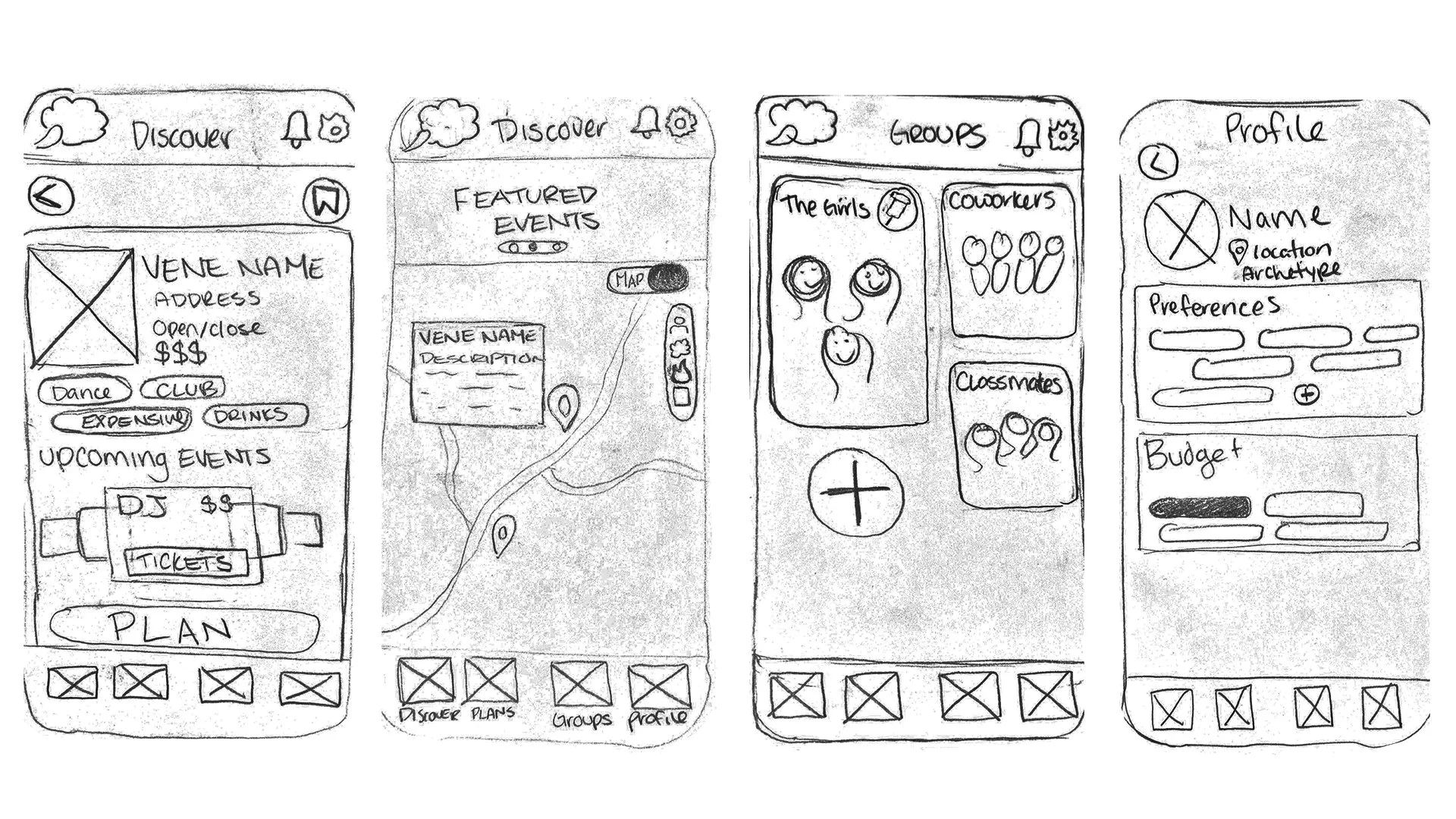
Using the four main user flows as our guide, we started sketching paper prototypes and tested them with people in real-life scenarios. Seeing how users interacted with the early screens helped us quickly spot what felt confusing.
Hi-Fi Design
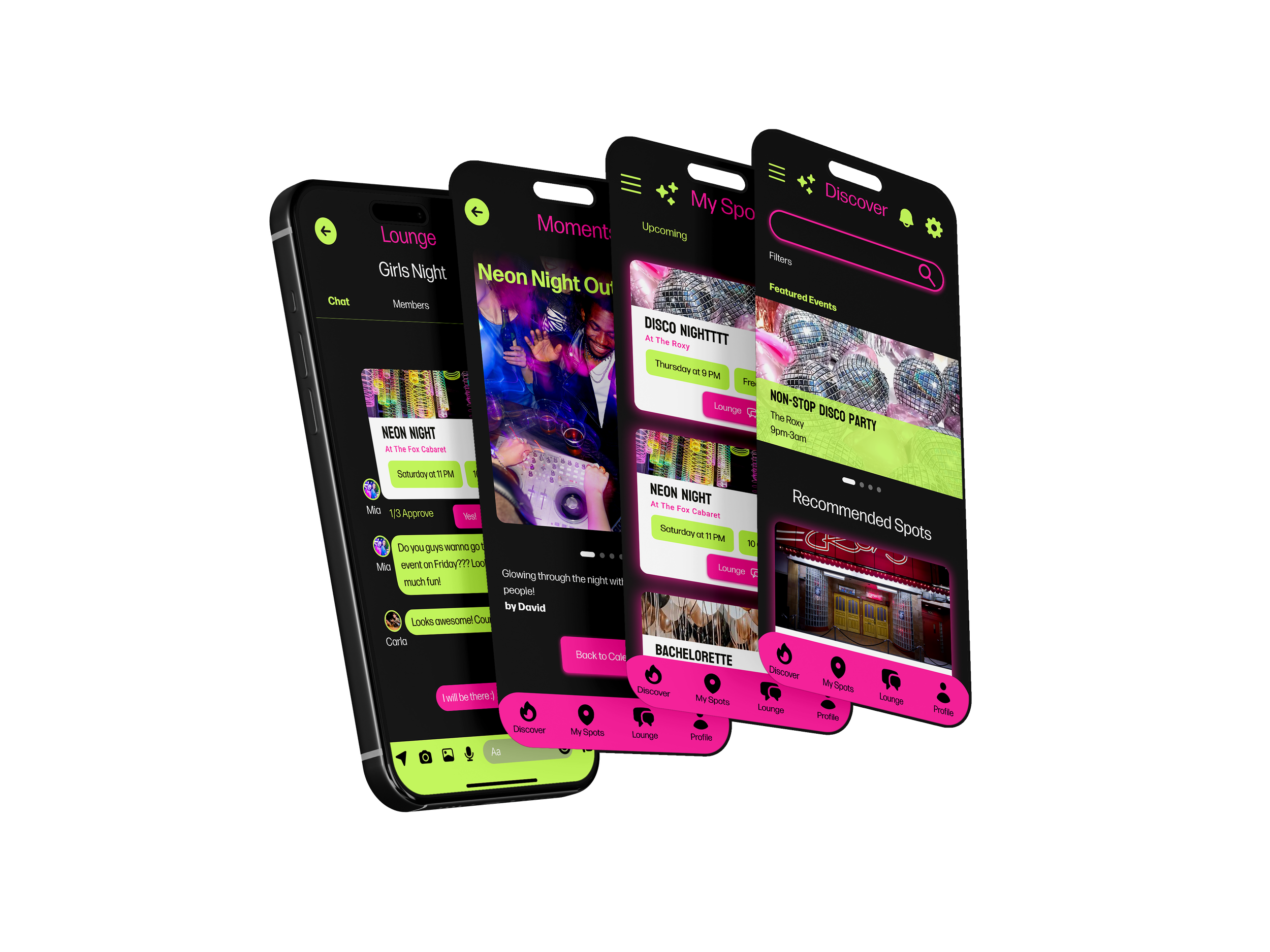
Clickable prototype
The clickable prototype includes four key user flows representing different stages of a night out.
First-time users go through an onboarding flow to personalize their experience, while returning users can skip onboarding and jump straight into planning.
Pre-event mode lets users explore and vote on event options, and during-event mode supports real-time coordination with location sharing, group messaging, and memory sharing.